
A look at Maria (R)
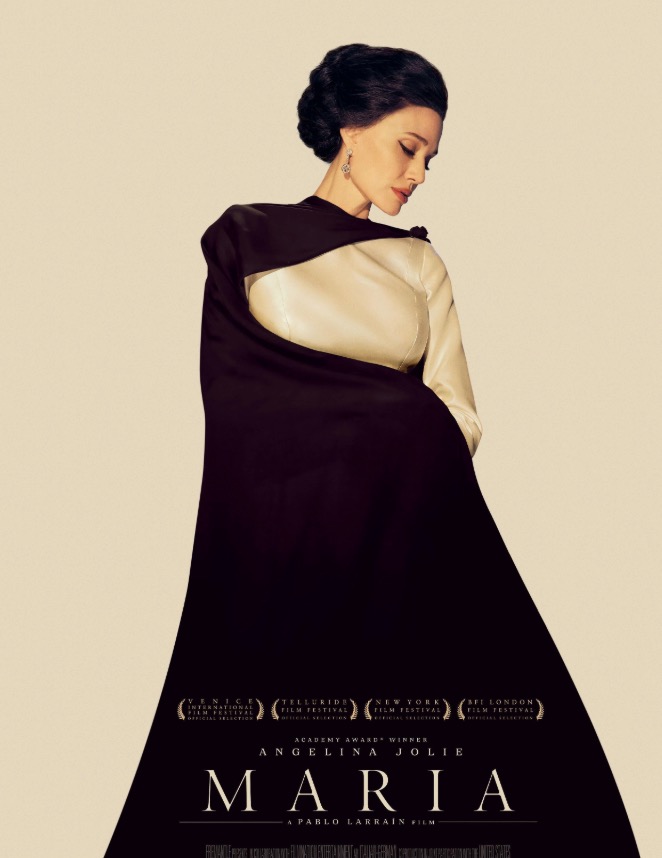
Director Pablo Larrain has been a lifelong follower of opera and in his latest film he shares his intense love of famed soprano Maria Callas.
It’s the final fortnight of the diva’s tumultuous life and we see her not only in her plush, grand Paris apartment but also at the Opera House where she attempts to re-create some of her favourite arias.
The Opera House pianist (Jeffrey Tate) encourages Callas (a brilliant Angelina Jolie) to get right through some of her famous opera arias, but the diva’s voice is failing and she stops midway through various performances.
Aged 53, she’s been retired for four years.
At home in her apartment she’s well looked after by butler cum chauffeur Ferrucio (Pierfrancesco Favino) and chef/cleaner Bruna (Alba Rohnwacher). They seem to spend a lot of afternoons moving Maria’s massive grand piano through a narrow dividing door from one sitting room to a second – and back again the next day.
Director Larrain takes us back to Maria’s poverty years growing up in Naples during World War 2.
Their impoverished and appalling mother pimped teenage Maria and her older sister out to Nazi and Italian soldiers, a fact we hear fleshed out in an up-market Paris cafe when Maria and the sister (Valeria Golino) meet in a catch-up.
Maria doesn’t let her sister in on her big secret though – her addiction to the synthetic sedative drug Mandrax.
Ferruccio and Bruna are well aware of Maria’s dependency on the drug, but they never divulge their secret to outsiders.
Director Larrain can’t let a Maria Callas storyline pass without bringing in Maria’s love interest: Aristotle Onassis (Haluk Bilginer).
It’s an important portion of Maria’s fragile – and indeed, very sad – life off the stage.
The Greek tycoon is depicted as a rather unpleasant, overpowering person and we found it incredible that she stuck with him even after he’d married Jackie Kennedy.
A lot of these details come in Maria’s out-pourings, on tape, with a besotted young journalist who interviews her on separate days when she feels comfortable revealing some of her life’s vastly insecure personal relationships.
Nor surprisingly director Larrain takes us to some of Callas’ famous arias and we noted on the end credits that Jolie’s actual voice had been multi-tracked and blended with that of Callas herself on some, but not all, of the arias.
But the most sad sections of the movie come when Ferruccio and Bruna find their mistress stretched out and unresponsive on one of the living room carpets. They call the police and ambulance services as a large crowd starts gathering on the street outside.
Great performance from Angelie Jolie. Four stars.
 australianrules.com.au